
Forex Trading Terminology Every Beginner Must Know
Forex Trading Terminology operates as a structured financial language that governs how traders interpret price movements, execute trades, and manage risk in the global currency market. Without a clear understanding of this terminology, a trader is essentially operating blind in a highly leveraged and volatile environment where precision determines outcomes.
This guide breaks down the essential Forex trading terms every beginner must master before placing a single trade. Each concept is explained in a practical, real-market context—not abstract theory—so you can directly connect Forex Trading Terminology to real trading decisions, risk control, and market interpretation.
1. Forex Market
The Forex Market (foreign exchange market) is the global, decentralized financial marketplace where currencies are bought and sold. Unlike traditional stock markets, it does not operate through a centralized exchange. Instead, it functions through a global network of banks, financial institutions, brokers, and individual traders.
This structure makes Forex the most liquid and continuously active financial market in the world.
Key Characteristics
- 24-hour market cycle (5 days a week)
The Forex market operates across major global financial centers including London, New York, Tokyo, and Sydney. Trading begins in Asia and moves through Europe and into North America, creating a continuous cycle of liquidity. - Decentralized (Over-the-Counter structure)
There is no physical exchange. All transactions occur electronically between participants through broker networks and interbank systems. - Highest liquidity financial market globally
With trillions of dollars traded daily, Forex offers extremely high liquidity, allowing traders to enter and exit positions with minimal price disruption.
Why it matters
The Forex market is the foundation upon which all Forex trading terminology exists. Every term—whether it is pips, leverage, spreads, or margin—is defined within this ecosystem.
Without understanding how the Forex market functions structurally, traders risk misinterpreting how price movements actually form and why volatility behaves differently across sessions.
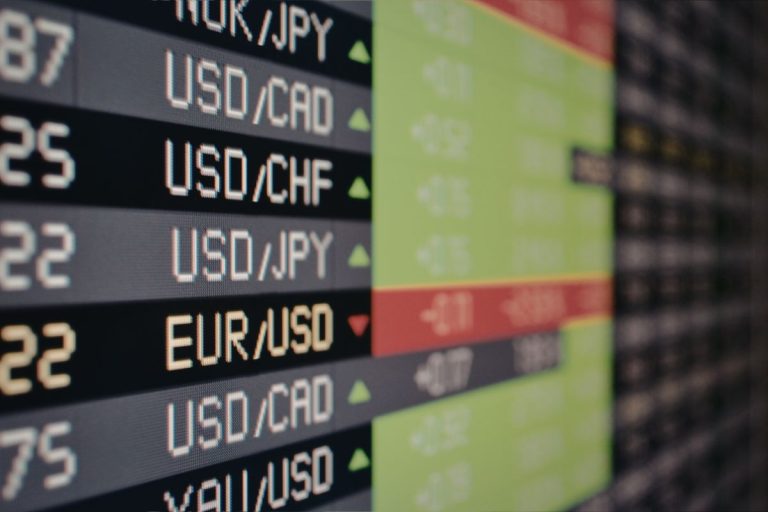
2. Currency Pair
A currency pair is the fundamental trading instrument in Forex, representing the exchange rate relationship between two different currencies.
Every Forex transaction involves simultaneously buying one currency while selling another.
Example
EUR/USD
- EUR = Base currency
- USD = Quote currency
Interpretation
The currency pair shows how much of the quote currency is required to purchase one unit of the base currency.
For example, if EUR/USD is trading at 1.1000, it means:
- 1 Euro = 1.10 US Dollars
This pricing structure allows traders to speculate on whether one currency will strengthen or weaken against another.
Why it matters
Currency pairs are not just symbols on a trading platform—they represent global economic relationships. Factors such as interest rates, inflation, and geopolitical stability all influence how these pairs move.
Understanding this structure is essential for reading market direction correctly.
3. Base Currency
The base currency is the first currency listed in a currency pair and serves as the reference point for all trade calculations.
Example
In GBP/USD:
- GBP is the base currency
- USD is the quote currency
Functional role
The base currency defines the unit being traded. When a trader buys or sells a currency pair, they are effectively making a decision on the strength of the base currency relative to the quote currency.
Why it matters
All profit and loss calculations in Forex trading are ultimately derived from movements in the base currency.
For example:
- If GBP strengthens against USD, the value of GBP/USD increases
- If GBP weakens, the pair declines
This makes the base currency the primary driver of directional analysis in any trade setup.
4. Quote Currency
The quote currency is the second currency in a pair and represents the value used to price the base currency.
Example
In EUR/USD:
- USD is the quote currency
Functional role
The quote currency determines how much is required to exchange for one unit of the base currency. It acts as the pricing denominator in all Forex valuations.
Market interpretation
When the quote currency strengthens:
- The currency pair value declines (because the base currency becomes relatively weaker)
When the quote currency weakens:
- The currency pair value increases (because the base currency gains relative strength)
Why it matters
Understanding the quote currency is essential for interpreting why a pair moves, not just how it moves. It provides context for macroeconomic influence and relative currency strength.
5. Pip (Percentage in Point)
A pip (Percentage in Point) is the standardized unit used to measure price movement in Forex trading. It is one of the most critical concepts in the entire trading ecosystem.
Standard definition
- For most currency pairs:
1 pip = 0.0001 - For Japanese Yen (JPY) pairs:
1 pip = 0.01
Example
If EUR/USD moves from:
- 1.1000 → 1.1005
That is a 5-pip movement
Strategic relevance
Pips are the foundation of all Forex performance measurement. They are used to calculate:
- Profit and loss (P&L)
- Trade risk exposure
- Reward-to-risk ratios
- Position sizing accuracy
Practical insight
Even small pip movements can have significant financial impact depending on:
- Lot size used
- Leverage applied
- Market volatility conditions
This is why professional traders do not view price in absolute numbers—they measure performance in pips, not prices.
6. Pipette
A pipette is a fractional measurement of a pip, specifically representing one-tenth of a pip (0.1 pip). It is used to provide more precise pricing in Forex markets, especially on platforms that display quotes with five decimal places.
Example
If EUR/USD is quoted as:
- 1.10005
The “5” in the last decimal place represents a pipette movement, giving traders a more granular view of price fluctuations.
Why it matters
Pipettes are primarily used in:
- High-frequency trading environments
- Scalping strategies where small price movements matter
- Broker pricing systems that offer tighter spreads
FX1Guide Insight
While pipettes may appear minor, they become significant when:
- Trading large lot sizes
- Executing multiple short-term trades
- Calculating ultra-precise entry and exit points
In modern Forex platforms, pipettes reflect market efficiency and pricing accuracy, especially in highly liquid currency pairs.
7. Lot Size
A lot size defines the volume or quantity of a trade in Forex. It determines how much currency you are buying or selling in a single transaction.
Standard types of lot sizes
- Standard Lot = 100,000 units
- Mini Lot = 10,000 units
- Micro Lot = 1,000 units
How it works in practice
If you trade 1 standard lot of EUR/USD, you are controlling 100,000 euros in the market. Every pip movement then has a direct monetary value depending on the lot size used.
Strategic importance
Lot size is one of the most critical risk management variables in trading because it directly influences:
- Risk level per trade – larger lots increase exposure
- Profit potential – gains scale with volume
- Margin requirements – higher lots require more capital
Professional insight
Experienced traders never choose lot size randomly. It is always calculated based on:
- Account size
- Risk percentage per trade
- Stop-loss distance in pips
This makes lot sizing a core component of disciplined trading systems.
8. Leverage
Leverage is a financial mechanism that allows traders to control a larger market position using a smaller amount of capital.
Example
With 1:100 leverage, a trader can control:
- $10,000 in the market using only $100
How it functions
Leverage is provided by brokers to amplify trading capacity. It does not increase your actual capital but increases your market exposure.
Risk reality
Leverage is often misunderstood. While it increases potential profit, it equally magnifies losses.
This makes it a double-edged financial instrument:
- Small price movements can generate large gains
- Small adverse movements can quickly deplete capital
FX1Guide Insight
Professional traders treat leverage as a controlled risk tool, not a profit shortcut. Proper use depends on:
- Position sizing discipline
- Stop-loss placement
- Account risk tolerance
9. Margin
Margin is the amount of capital required to open and maintain a leveraged trading position. It is not a fee, but rather a portion of your account balance set aside as collateral.
Explanation
When you open a trade using leverage, the broker locks a portion of your funds as margin to secure the position. This ensures that you can cover potential losses.
Example logic
If you open a large position, only a fraction of its total value is required upfront as margin due to leverage.
Key risk trigger
If the market moves against your position and your account equity drops below required margin levels:
- Positions may be automatically closed (margin call or stop-out)
Strategic importance
Margin is directly tied to:
- Account safety
- Position sustainability
- Risk exposure control
Understanding margin is essential for preventing forced liquidation in volatile market conditions.
10. Free Margin
Free margin represents the available capital in your trading account that is not currently tied to open positions. It is the usable buffer that allows you to open new trades.
Formula
Equity – Used Margin = Free Margin
Breakdown
- Equity: Real-time account value (balance + floating P/L)
- Used Margin: Capital locked in active trades
- Free Margin: Remaining usable capital
Importance in trading
Free margin determines:
- Whether you can open new positions
- Your ability to withstand market fluctuations
- Overall account flexibility
FX1Guide Insight
Low free margin increases vulnerability to:
- Margin calls
- Forced trade closures
- Reduced trading flexibility
High free margin indicates:
- Strong account stability
- Better risk absorption capacity
- More controlled exposure management
11. Equity
Equity represents the real-time value of a trading account, reflecting its true financial position at any given moment. Unlike account balance, which only reflects closed trades, equity continuously fluctuates based on active market positions.
Formula
Equity = Balance + Floating Profit/Loss
How it works in practice
- If you have open trades in profit, your equity increases above your balance
- If open trades are in loss, your equity decreases below your balance
Why it matters
Equity is one of the most important account metrics because it shows your true financial standing in real time, not just historical deposits or closed results.
FX1Guide Insight
Professional traders monitor equity closely because it directly influences:
- Margin levels
- Risk exposure
- Survival during drawdowns
Ignoring equity and focusing only on balance is a common beginner mistake that leads to poor risk decisions.
12. Spread
The spread is the difference between the bid price and the ask price. It represents the built-in transaction cost of entering a trade in the Forex market.
Example
- Bid: 1.1050
- Ask: 1.1052
- Spread: 2 pips
How it works
When a trader opens a position:
- They enter at the ask price when buying
- They enter at the bid price when selling
The spread is effectively the cost paid to the broker or liquidity provider for facilitating the trade.
Market impact
- Tight spreads = lower trading costs, more efficient execution
- Wide spreads = higher costs, often during low liquidity or high volatility periods
FX1Guide Insight
Spread size directly affects profitability, especially for:
- Scalpers
- High-frequency traders
- Short-term strategies
Even small spread differences can significantly impact long-term trading performance.
13. Bid Price
The bid price is the price at which the market is willing to buy a currency from a trader.
Interpretation
For traders, the bid price represents the selling price of a currency pair.
Practical example
If EUR/USD is quoted:
- Bid: 1.1050
This means traders can sell EUR at 1.1050.
How it fits into trading
The bid price is always slightly lower than the ask price. This difference forms part of the spread.
FX1Guide Insight
Understanding bid price is essential for:
- Exit timing decisions
- Trade valuation
- Spread calculation clarity
14. Ask Price
The ask price is the price at which the market is willing to sell a currency to a trader.
Interpretation
For traders, the ask price represents the buying price of a currency pair.
Practical example
If EUR/USD is quoted:
- Ask: 1.1052
This means traders can buy EUR at 1.1052.
How it fits into trading
The ask price is always slightly higher than the bid price, creating the spread.
FX1Guide Insight
The ask price is the entry point for buy orders, making it a critical reference for:
- Trade entry execution
- Cost calculation
- Strategy timing precision
15. Stop Loss
A stop loss is a predefined risk management order that automatically closes a trade once it reaches a specified loss level.
How it works
When a trade moves against a trader and hits the stop loss level:
- The position is automatically closed
- Further losses are prevented
Function in trading systems
Stop loss acts as an automatic risk control mechanism, removing emotional decision-making from trading exits.
Strategic importance
Stop loss is essential for:
- Capital protection
- Risk consistency across trades
- Preventing emotional holding of losing positions
- Maintaining disciplined trading execution
FX1Guide Insight
Institutional traders treat stop loss not as an option, but as a non-negotiable structural component of every trade setup. Without it, risk becomes undefined and account survival becomes unpredictable.
16. Take Profit
A Take Profit (TP) order is a predefined instruction that automatically closes a trade once a specific profit target is reached. It is a core component of disciplined trading strategy and structured risk-reward execution.
Purpose
- Locks in profits without manual intervention
- Eliminates emotional decision-making during market fluctuations
- Ensures trading outcomes align with pre-planned strategy
Strategic importance
Take Profit levels help traders maintain consistency by enforcing a systematic exit strategy. Without it, profitable trades are often left open too long, increasing the risk of reversal and lost gains.
In professional trading environments, Take Profit is always defined before trade execution as part of a complete risk-reward model.
17. Bullish Market
A bullish market describes a sustained period where prices are trending upward, reflecting strong buying pressure and positive market sentiment.
Characteristics
- Consistent upward price movement
- Buyer dominance over sellers
- Increasing market confidence and optimism
Market interpretation
In a bullish environment, traders generally look for:
- Buy opportunities (long positions)
- Trend continuation setups
- Breakout confirmations
FX1Guide Insight
Bullish markets are driven not only by price movement but also by underlying economic strength, investor sentiment, and macroeconomic expectations.
18. Bearish Market
A bearish market refers to a sustained downward trend in prices, driven by strong selling pressure and negative market sentiment.
Characteristics
- Continuous price decline
- Seller dominance in the market
- Reduced investor confidence
Market interpretation
In bearish conditions, traders typically focus on:
- Sell opportunities (short positions)
- Reversal or continuation breakdowns
- Defensive risk management strategies
FX1Guide Insight
Bearish markets often create sharp and fast movements, making risk control and timing even more critical than in bullish conditions.
19. Volatility
Volatility measures the rate and intensity at which price changes occur in the Forex market. It is a key indicator of market activity and risk environment.
Types of volatility
- High volatility: Rapid and large price fluctuations within short timeframes
- Low volatility: Stable, slow-moving price behavior with limited range expansion
Trading implication
Volatility directly influences:
- Trade opportunity frequency
- Risk exposure per position
- Stop-loss placement accuracy
- Profit potential per move
FX1Guide Insight
High volatility environments increase both opportunity and risk. Traders must adjust:
- Position sizing
- Stop-loss distance
- Entry timing strategies
Volatility is not inherently good or bad—it defines the behavioral environment of the market.
20. Liquidity
Liquidity refers to how easily a currency can be bought or sold in the market without causing significant price movement.
Forex context
- Major pairs (e.g., EUR/USD, GBP/USD) → High liquidity
- Exotic pairs (e.g., USD/TRY, EUR/SEK) → Low liquidity
Why liquidity matters
High liquidity ensures:
- Faster trade execution
- Tighter spreads
- More stable pricing conditions
- Reduced slippage risk
Low liquidity conditions often result in:
- Wider spreads
- Erratic price movements
- Higher trading costs
FX1Guide Insight
Liquidity is one of the most overlooked but critical elements in Forex trading. It directly impacts execution quality and overall trading efficiency, especially during news events or off-peak market hours.
Continue Learning Forex Trading Terminology with FX1Guide
Mastering Forex Trading Terminology is an ongoing process, not a one-time milestone. These 20 core terms provide a strong foundation, but real trading confidence comes from continuously expanding your understanding of how market language translates into real-world decisions. At FX1Guide, we break down complex trading concepts into structured, practical insights designed to help you progress from beginner to informed trader. Explore more advanced Forex trading terminologies, deepen your market knowledge, and build a strategy grounded in clarity, precision, and disciplined execution.