What is Forex Trading?
Forex trading—short for foreign exchange trading—is the process of buying one currency while simultaneously selling another, with the goal of profiting from changes in exchange rates. It is the largest financial market in the world, with trillions of dollars traded daily by banks, institutions, businesses, and individual traders.
At its core, forex trading is about understanding how global currencies move in relation to each other and using that knowledge to make informed trading decisions.
What Is Forex Trading and How Does It Work?
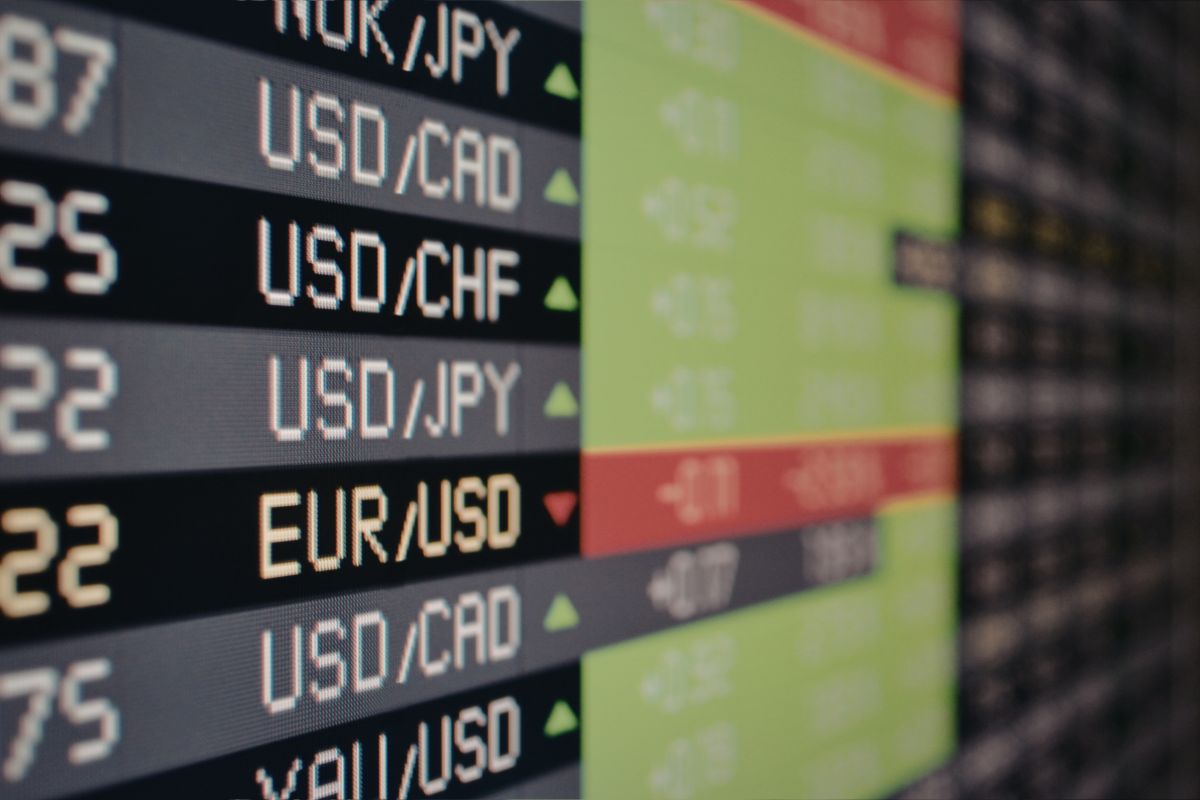
In forex trading, currencies are traded in pairs, meaning you are always exchanging one currency for another. For example, in the pair EUR/USD, you are comparing the Euro against the US Dollar.
- If you believe the Euro will strengthen against the Dollar, you buy (go long) the pair.
- If you believe the Euro will weaken, you sell (go short) the pair.
The price of a currency pair reflects how much of the second currency is needed to buy one unit of the first. Profit or loss is made based on how that price moves after you enter a trade.
Key Components of Forex Trading
Understanding forex trading becomes easier when you break it down into its core elements:
- Currency Pairs
These are the instruments you trade, such as EUR/USD, GBP/JPY, or USD/JPY. Each pair has its own behavior based on economic and geopolitical factors. - Exchange Rate Movements
Prices move due to supply and demand, influenced by interest rates, inflation, economic data, and global events. - Leverage
Forex brokers often allow you to control larger positions with a smaller amount of capital. While this can increase profits, it also significantly increases risk. - Bid and Ask Price
The bid is the price at which you can sell, and the ask is the price at which you can buy. The difference between them is called the spread. - Pips
A pip is the standard unit used to measure price movement in a currency pair. Small changes in pips can translate into profit or loss.
Why Forex Trading Attracts Traders Worldwide
Forex trading has become popular across the globe for several practical reasons:
- 24-Hour Market Access
The forex market operates five days a week, allowing traders to participate at almost any time. - High Liquidity
With massive daily trading volume, it is easy to enter and exit trades quickly. - Accessibility
You can start trading with relatively small capital compared to other financial markets. - Opportunity in Rising and Falling Markets
Traders can profit whether the market is going up or down by buying or selling currency pairs.
Types of Forex Trading Approaches
Different traders use different strategies depending on their goals, time, and experience level:
- Scalping
Involves making multiple quick trades to capture small price movements. - Day Trading
Positions are opened and closed within the same trading day to avoid overnight risk. - Swing Trading
Trades are held for several days to capture medium-term price movements. - Position Trading
A long-term approach based on broader market trends and economic fundamentals.
Risks Involved in Forex Trading
While forex trading offers opportunities, it also comes with real financial risk. Understanding these risks is essential:
- Market Volatility
Prices can change rapidly due to news or economic events. - Leverage Risk
While leverage can amplify profits, it can also magnify losses. - Emotional Decision-Making
Trading without a clear plan often leads to inconsistent results. - Lack of Strategy
Entering trades without a tested system increases the likelihood of losses.
The Importance of a Structured Trading Approach
Successful forex trading is not based on luck or predictions—it is built on strategy, discipline, and consistency. Traders who perform well over time typically rely on:
- Clear entry and exit rules
- Proper risk management
- Backtested strategies
- Continuous learning and performance tracking
Without structure, trading often becomes guesswork, which rarely leads to sustainable results.
Final Thoughts on Forex Trading Defined
Forex trading is a powerful financial activity that allows individuals to participate in the global currency market. While it offers flexibility and opportunity, it requires knowledge, discipline, and a well-defined system to succeed.
Rather than chasing quick profits, the focus should be on building real skills, understanding market behavior, and trading with a clear, rule-based approach. That is what separates consistent traders from those who struggle in the long run.
FAQs on What is Forex Trading
To fully understand What is Forex Trading, you need more than a basic definition—you need clarity on how the market actually behaves in real conditions. These FAQs break down the most important beginner questions in a structured, practical, and easy-to-apply format. The goal is to help you connect theory with real trading logic, not just memorization.
1. What exactly is Forex trading?
Forex trading is the exchange of one currency for another with the intention of profiting from changes in exchange rates. Every transaction involves a currency pair, meaning you are always buying one currency while selling another at the same time.
In practical terms, you are not trading a single asset—you are trading the relative strength between two economies. That is what makes Forex dynamic, global, and constantly moving.
2. How does Forex trading actually generate profit?
Profit in Forex comes from price movement within a currency pair.
When you enter a trade, you are making a directional decision:
- If you expect the base currency to strengthen, you buy
- If you expect it to weaken, you sell
Your profit or loss is determined by how far the market moves in your favor or against you after entry. This movement is measured in pips, which represent small but meaningful price changes.
3. Is Forex trading suitable for beginners?
Yes, Forex trading is accessible to beginners, but accessibility does not mean simplicity.
For beginners, the real challenge is not entry—it is consistency. Without structure, most new traders struggle due to:
- Emotional decision-making
- Lack of risk control
- Absence of a clear trading system
This is why learning What is Forex Trading should always be followed by structured education and practice before risking real capital.
4. How much money do I need to start Forex trading?
There is no fixed amount required to start Forex trading because brokers allow flexible account sizes.
However, the more important question is not how much you start with—but how you manage it.
A small account with strong risk management can survive longer than a large account with poor discipline. In Forex, survival is more important than size at the beginning stage.
5. What is a currency pair in Forex trading?
A currency pair represents the value relationship between two currencies.
For example, in EUR/USD:
- EUR is the base currency
- USD is the quote currency
This means you are always trading how one currency performs against another. Price movement reflects the shifting strength between two global economies.
6. What is leverage in Forex trading?
Leverage allows you to control a larger trade size using a smaller amount of capital.
While this increases exposure and potential returns, it also increases risk significantly. This is why leverage must always be used with structured risk management.
In simple terms, leverage amplifies both outcomes—profit and loss.
7. Is Forex trading risky?
Yes, Forex trading carries real financial risk because prices are constantly influenced by global economic and political events.
The real risk is not just market movement—it is how traders respond to that movement.
Common risk drivers include:
- High leverage usage
- Lack of stop loss protection
- Emotional trading decisions
Risk is not avoidable, but it can be managed through structure and discipline.
8. What is a pip in Forex trading?
A pip is the standard unit used to measure price movement in Forex.
Even though it represents a small change, its impact depends on:
- Trade size
- Leverage
- Market volatility
Pips are the foundation of how profit and loss are calculated in trading positions.
9. Can Forex trading be done full-time?
Yes, Forex trading can become a full-time activity, but it is not achieved through shortcuts or early expectations.
Full-time trading requires:
- Consistent profitability over time
- Strong risk management discipline
- Emotional stability under pressure
- A tested and repeatable trading system
Most traders transition into full-time trading gradually, not immediately.
10. What is the best way to learn Forex trading?
The most effective way to learn Forex trading is through structured progression rather than random information consumption.
A strong learning path includes:
- Understanding market fundamentals
- Practicing on a demo account
- Developing a simple trading strategy
- Applying strict risk management
- Transitioning gradually to live trading
In Forex Trading, learning is not about speed—it is about building competence layer by layer.
Understanding Forex Trading is only the beginning of your journey. Real progress starts when knowledge is converted into structured execution. Traders who succeed long term are not those who know the most—but those who apply what they know with discipline, consistency, and controlled risk.
At FX1Guide, the focus is on helping you move from theory to structured trading behavior—so you can approach the market with clarity, not confusion, and with strategy, not speculation.
Continue Your Forex Learning Journey with FX1Guide
Understanding Forex Trading is your entry point into the market—but real progress begins when knowledge is structured into consistent execution. The difference between learning and trading success lies in how well you apply risk management, strategy, and discipline under real market conditions. At FX1Guide, we focus on simplifying Forex into a structured, practical learning system designed for beginners and developing traders. Our goal is to help you move beyond theory and build a trading approach grounded in clarity, control, and long-term consistency. Continue exploring FX1Guide resources to strengthen your understanding, refine your decision-making, and develop a more professional approach to Forex trading.